"El parcero del popular No 8" with the "Pachanga y Son".
"Pachanga y Son" is a musical and artistic grouping of salsa in the city of Medellin. They seamlessly blend language and popular culture of the communes.
martes, 28 de junio de 2011

lunes, 27 de junio de 2011
Hector Lavoe.

Hector Lavoe is considered the best sonero after Ismael Rivera "El Sonero Mayor". His charisma on stage and his gift of people out of it, won the idolatry of his fans, almost revered as a martyr of the rumba and the street.
Hector Lavoe whose real name was Hector Juan Perez was born in Ponce Puerto Rico, September 30, 1946, as most of the singers of popular music, his parents were very poor. Being very young he moved to the city of "Los rascacielos" New York seeking fame and fortune as an artist.
Song "Cancer" by Hector Lavoe.
Ruben Blades

Rubén Blades Bellido de Luna.
Born in Panama on July 16, 1948. He is a singer, songwriter, musician, actor, lawyer and politician Panamanian spent most of his career in the United States. His style has been described as "intellectual salsa". Ruben B. participate in the government of Panama as minister of tourism. He is a very complete artist.
Born in Panama on July 16, 1948. He is a singer, songwriter, musician, actor, lawyer and politician Panamanian spent most of his career in the United States. His style has been described as "intellectual salsa". Ruben B. participate in the government of Panama as minister of tourism. He is a very complete artist.
Original video of the song "Sicarios"
Want to dance salsa?

This is an article reporting on a place to dance in the city of Medellin
Visit the following link:
http://www.salsahook.com/archive/details/2011/06/16/103/Salsa-Dancing-at-El-Eslabn-Prendido-in-Medellin-Colombia
Latina stereo
Latin stereo, the station of salsa music.

In the FM 100.9 you can "stereo America." Some experts say is the largest and comprehensive archive of salsa around the world.
With varied programs "Latina stereo" has kept the salsa music in the ears and in the dances of the people of Medellin.
Besides that, the station funded and publicized some salsa bands in town.
Since its frequency is only available for Medellin, here you can listen online:
http://www.latinastereo.com/

In the FM 100.9 you can "stereo America." Some experts say is the largest and comprehensive archive of salsa around the world.
With varied programs "Latina stereo" has kept the salsa music in the ears and in the dances of the people of Medellin.
Besides that, the station funded and publicized some salsa bands in town.
Since its frequency is only available for Medellin, here you can listen online:
http://www.latinastereo.com/
Salsa made in Medellín.
A band of Medellín. La sonora 8.
Medellin is a city with good salsa bands. From Medellin, Cali and Bogota can make a map of the Colombian salsa.
La sonora 8 is a young band but has managed to attract the young public of the city.
Enjoy the sound of this excellent band.
La sonora 8 is a young band but has managed to attract the young public of the city.
Enjoy the sound of this excellent band.
This is his blog:
http://www.myspace.com/sonora8/music
miércoles, 22 de junio de 2011
history of salsa
HISTORY OF SALSA
Raíces/ Roots The history of the Latin popular music known worldwide as “salsa” began centuries ago in the islands of the Spanish Caribbean, in a context of slavery and colonialism. Yet, it is inextricably tied to twentieth-century New York City and the growth of a thriving Latino community here. Its distinctive polyrhythm and vocal and instrumental call-and-response identify the Afro-Caribbean roots of Latin music –traditional and contemporary, sacred and secular. The colonial Era The story of Latin popular music reveals the triumph of the human spirit over the crushing forces of slavery and colonialism. For centuries, men, women, and children from West and Central Africa-the lands of the great nations of the Yoruba, Efik, and Bantu peoples, among others-were brought in chains to Cuba, Puerto Rico and Hispaniola (now the Dominican Republic and Haiti). Thrown into encounters with diverse and heretofore unknown African, European, and indigenous peoples and cultures, they carved out ways to ensure their own survival and that of their cultural expressions. Though plantation life was harsh under Spanish rule, it allowed for the establishment of sacred and secular cultural institutions, such as religious houses and brotherhoods, in which tradition could be maintained and adapted and new traditions created. “Cimarron” (escaped slave) communities also provided a context for the preservation of traditional musical forms. By the late nineteenth century, slavery had come to an end throughout the Caribbean region. The euphoria of freedom soon gave way to the reality of making a new life in the midst of economic and political upheaval. The Spanish American war of 1898 resulted in the end of Spanish colonial rule and the emergence of the United States as the dominant imperial power in the region. With the transformation of plantation economies into agribusiness, displaced agricultural workers migrated from countryside into town, and from island to island. Blacks, whites, and “criollos” arrived in Havana, bringing the rhythms of “Rumba” and “Changui”. To San Juan they brought “Bomba” and “Seis”, and to Santo Domingo, “Merengue” and “Carabiné”. Transplanted and transformed in the urban settings, these and other sounds and styles were selectively brought to New York City in successive migrations. New York City beginnings While Puerto Rican settlement in New York began before 1898, migration increased once the island came under USA control. The first Puerto Rican “colonia” (neighborhood) developed in the area around the Brooklyn Navy Yard. By 1917, when the Jones Act made Puerto Ricans U.S. citizens, east Harlem’s “El Barrio” had become the “colonia” of choice for new arrivals. An unforeseen result of citizenship was the earliest collaboration between African-American and Puerto Rican musicians and the earliest documented presence of Puerto Rican musicians in New York City, brought about by James Reese Europe (1881-1919), founder of the first booking agency for African-American musicians and director of the first African-American band to play in the Carnegie Hall. With the outbreak of World War I, Europe enlisted in a black regiment of New York National Guard. When asked to organize “the best damn brass band in the United States Army”, Europe traveled to Puerto Rico to audition Island black musicians trained in municipal bands. The eighteenth men recruited included Rafael Hernández (1891-1965), who was to become one of Puerto Rico’s most famous and beloved composers. Europe’s band (later known as the 369th infantry “Harlem Hellfighters” band) is credited with introducing European audiences to Jazz. Back in New York City, its Puerto Rican members were the first Latinos to record and perform with African-American jazz in the city’s clubs and theater orchestras. Other Island musicians and workers quickly followed, as the interwar decades saw continued economic hardship in the Caribbean and the rise of employment opportunities in New York City. Latino communities in New York supported dozens of Spanish-language theaters, dance, halls, nightclubs, social clubs, and music stores, all which fostered the development of a dynamic New York Latin music scene. And then they called “Salsa” The musical excitement of the 1950’s flowed into the 1960’s. Alegre, the first Latino owned record label to record the “new” New York sound, rose to prominence. Charanga dance ensembles, with their distinctive string and flute sound, challenged the popularity of the mambo bands. Spearheaded by Dominican-born flutist Johnny Pacheco (b.1935), pachanga became a hot dance fad. Eddie Palmieri (b.1936) with Barry Rogers (1935-1991), Ray Barreto (b.1929), and Larry Harlow, developed innovative ensemble formats. Younger barrio musicians such as Joe Cuba, Johnny Colon, and Pete “Conde” Rodriguez created Latin bugalú, the first combination of rhythm and blues and Latin music. The Lebrón Brothers, Willie Colon (b.1950), and Héctor Lavoe (1946-1993) followed suit and moved into a hard-edged, urban sound. Following the Cuban revolution, the United States ended diplomatic relations with Cuba in 1961. This action cut off the flow of music and musicians that had inspired the New York scene for decades. Four years later, immigration policy changes opened the door to migrations from previously excluded countries. Along with other demographic shifts, these two events altered the course of Latin music in ways that defined it even more sharply as a New York phenomenon. By the late 1960’s, the Dominican community had burgeoned, and rhythms such as the Dominicanmerengue, Colombia cumbia, and Puerto Rican plena and jibaro styles had become part of the New York music scene. By the early 1970’s music once identified by specific forms and styles was clustered together under the salsa rubric. The tag gained commercial currency after “Fania” Records- the most influential record label in the field- adopted it to describe the New York music label produced. The name may have been new, but the sound of salsa is rooted in the rich mix of cultures, races and rhythms that is New York Latin music. |
Ismael Rivera.
Song: Mi negrita me espera.
Hi, Creta.
This is a famous theme Ismael Rivera. This song always sounds when you close the Tibiri-Tabara. The Tibiri a bailader on 70 stret.
Topic: Salsa
How is the oral presentation going to be?:
The oral presentation going to be a Radial Show. The Radial Show is a program of interviews to artists, misicians and experts of salsa music, also as moviment. The gests and the interviewer speak about experiences of your jobs.
Who is going to do what?:
Characters.
Announcer: jimi salcedo Historian: music Lavoe Ruben Blades Singer: Cheo Feliciano Percussionist: Poncho Sanchez
History.
A radio station has a program of Latin American music, "Latin flavor" In one of the programs invite the singer Cheo Feliciano. Percussionist Poncho Sanchez and Ruben Blades Lavoe salsomano historian.
Salcedo jimi where the journalist makes numerous questions to the characters. The characters are telling the story of salsa.
The oral presentation going to be a Radial Show. The Radial Show is a program of interviews to artists, misicians and experts of salsa music, also as moviment. The gests and the interviewer speak about experiences of your jobs.
Who is going to do what?:
Characters.
Announcer: jimi salcedo Historian: music Lavoe Ruben Blades Singer: Cheo Feliciano Percussionist: Poncho Sanchez
History.
A radio station has a program of Latin American music, "Latin flavor" In one of the programs invite the singer Cheo Feliciano. Percussionist Poncho Sanchez and Ruben Blades Lavoe salsomano historian.
Salcedo jimi where the journalist makes numerous questions to the characters. The characters are telling the story of salsa.
jueves, 16 de junio de 2011
Table of content
Presentation of the radial program
Presentation of the guests
Intervention of the historian
Presenter’s intervention
Intervention of musician
Singer’s intervention
Commercial court
Presenter’s intervention
Singer’s intervention
Intervention of the historian
Intervention of musician
Commercial court
Presenter’s intervention
Intervention of musician
Intervention of the historian
Singer’s intervention
Presenter’s intervention (Farewell).
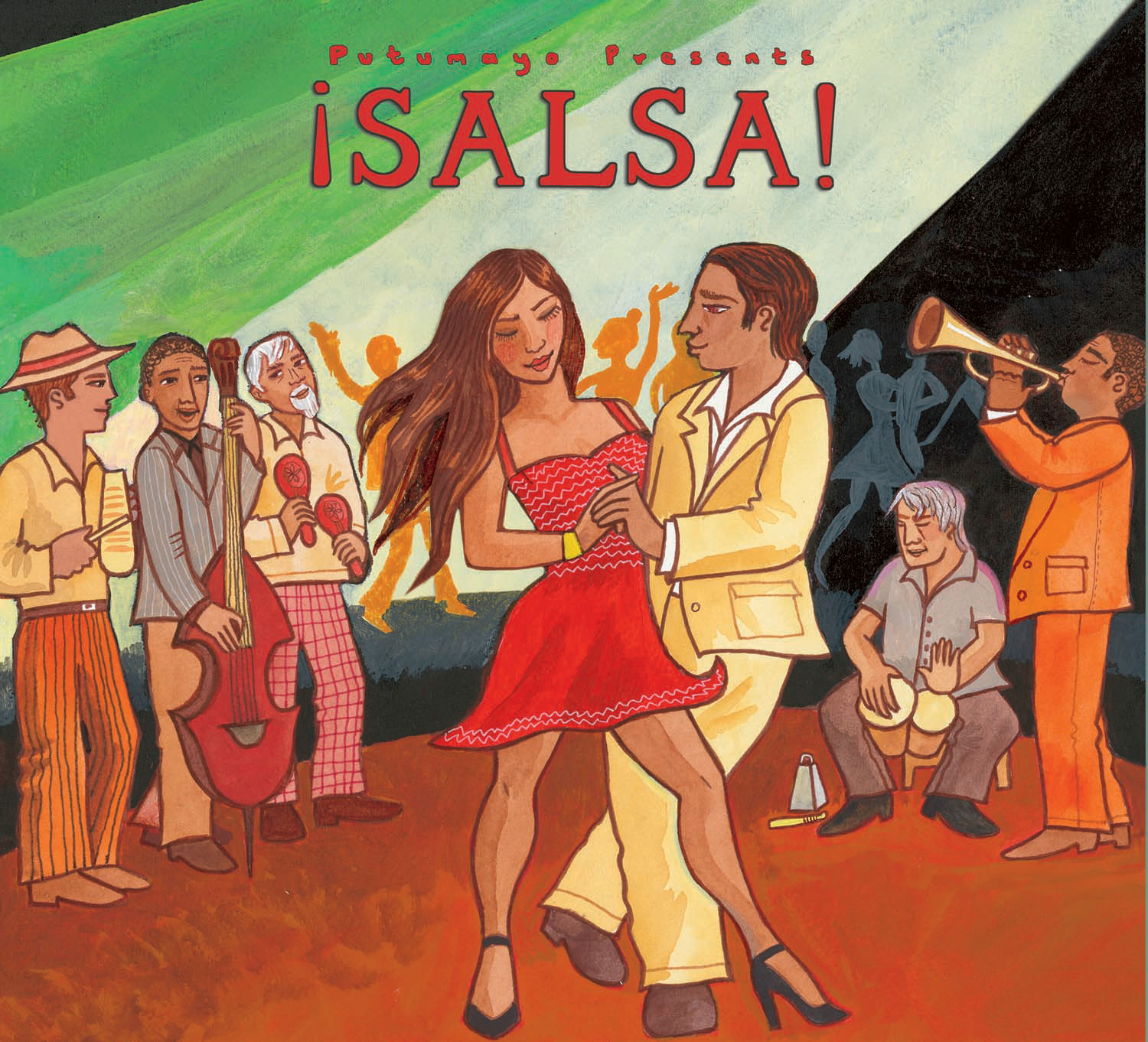

Salsa (music genre).
Salsa is a musical genre and culture, developed by Latino musicians of Caribbean origin, having the following characteristics:
Rhythm: Use based on the same rhythmic pattern are, are two key measures of 4 / 4.
Melody: It presents a mix of melodic features melodic features Cuban jazz and folkloreconventional Latin.
Harmony: Docks harmonic features with certain features of Cuban jazz and other Latin music.
Instrumentation: Use instruments Cuban popular since the 20's: pails or drums dance, bongo, guiro Cuban cowbell, two maracas (in other regions only used one), Congo (differed from other drums, Afro-Latinos by fitting pitch) and instruments piano, bass(sometimes electric bass), trumpet, saxophone (especially baritone) and trombone (in some cases and especially in traditional sauce, used the flute and violin).
La Salsa, was propelled by musical influences from various styles native Cubans, asdanzon, guaracha, Guaguanco, Mambo, cha-cha, Son Montuno and indistinguishablefor most people.
Rhythm: Use based on the same rhythmic pattern are, are two key measures of 4 / 4.
Melody: It presents a mix of melodic features melodic features Cuban jazz and folkloreconventional Latin.
Harmony: Docks harmonic features with certain features of Cuban jazz and other Latin music.
Instrumentation: Use instruments Cuban popular since the 20's: pails or drums dance, bongo, guiro Cuban cowbell, two maracas (in other regions only used one), Congo (differed from other drums, Afro-Latinos by fitting pitch) and instruments piano, bass(sometimes electric bass), trumpet, saxophone (especially baritone) and trombone (in some cases and especially in traditional sauce, used the flute and violin).
La Salsa, was propelled by musical influences from various styles native Cubans, asdanzon, guaracha, Guaguanco, Mambo, cha-cha, Son Montuno and indistinguishablefor most people.
Ismael Rivera.

miércoles, 15 de junio de 2011

Suscribirse a:
Entradas (Atom)